China's Nine Food-as-Medicine Substances Now Carry Origin Limits: What Lishui's Lingzhi Playbook Shows
Nine substances, including lingzhi and dangshen, are now in China's food-as-medicine catalogue — but approved production regions, not the catalogue itself, set the real barrier to entry.
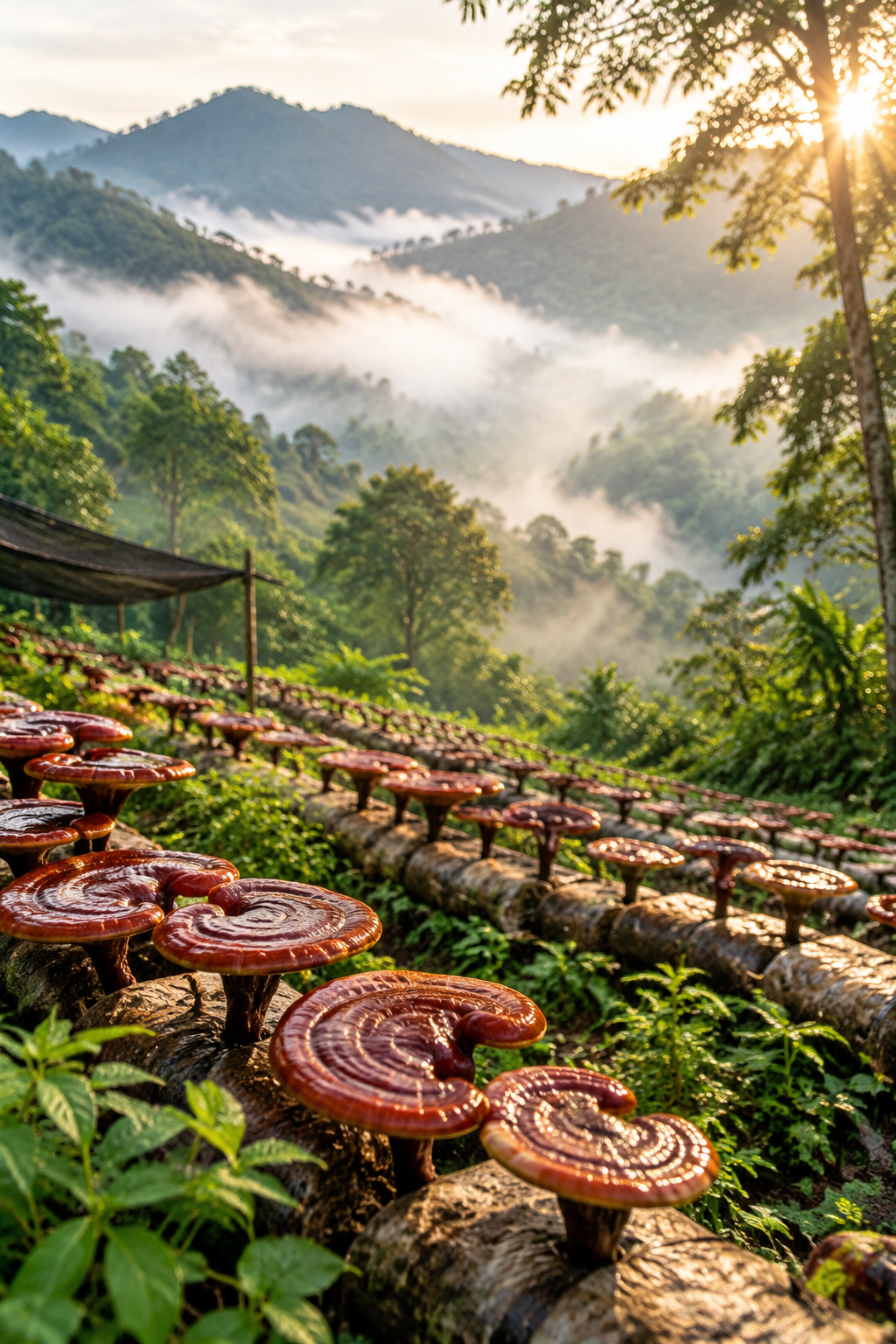
China's catalogue of food-as-medicine substances — those materials treated as both food and medicine under the country's medicine-food homology principle — has kept expanding. As of now, nine substances have been brought under catalogue management: dangshen (Codonopsis root), roucongrong (cistanche), tiepi shihu (Dendrobium officinale), xiyangshen (American ginseng), huangqi (astragalus), lingzhi (reishi), shanzhuyu (cornus), tianma (gastrodia) and duzhongye (eucommia leaf).
What is different this time is that, according to public reports, they cannot be produced or traded in every region of the country. The origin-restriction column is quietly changing the threshold for the raw-materials business.
How Lishui turned lingzhi into a commercial product is a sample worth taking apart.
Background: the catalogue widened, but the origin column now screens people out
Lingzhi entering the food-as-medicine catalogue is good news. The more useful piece of information for anyone doing product selection is this: the pilot for these substances has not been rolled out nationwide, and both production and trading must take place in permitted regions.
The question of a raw material's "identity" has been settled. The question of origin qualification has only just begun.
What Lishui holds is resources. According to "Good Mountains and Good Water Produce Good Medicine — the Leap Forward of Lishui's Traditional Chinese Medicine Health Industry," published by Tencent News, Lishui has a forest coverage rate of 80.81% and 2,478 species of wild Chinese medicinal materials, accounting for 85.2% of Zhejiang province's total. It is known as "East China's treasure house of medicinal plants."
These figures are not promotional language. They determine one thing: whether a place can assemble variety, volume and stable supply at the same time.
Our judgement, stated up front: in the food-as-medicine lane, origin is not background colour. It is itself an entry condition.
What was done: putting mountain goods into a "variety — entity — product" frame
Lishui did not start by selling raw materials.
Step one: establish varieties first. The locality selected nine geo-authentic herbs and named them "Lijiuwei" — Lishui's nine flavours. Lingzhi, tiepi shihu, sanyeqing (Tetrastigma hemsleyanum), huangjing (polygonatum), fupenzi (raspberry), Chuzhou white lotus seed, shiliangcha, yiyiren (coix seed) and Huangju chrysanthemum are among them. Only with a name can there be standards to discuss.
Step two: find an entity for the brand. In April 2025, Lishui formally launched the "Lijiuwei" regional public brand. Zhejiang Shengshengtang Traditional Chinese Medicine Group, Zhejiang Wuyangtang Pharmaceutical and other companies — 21 in total — became the first batch of member enterprises, and 44 products including huangjing instant drink granules and sanyeqing powder received first-batch authorisation.
Step three: bring the growing end under management. The locality has promoted ecological cultivation and built medicinal-material planting demonstration bases and seed-breeding bases. After lingzhi was brought into the food-as-medicine catalogue, the weight of this step changed — what used to be "growing it well" now also means "growing it compliantly."
These three steps look slow, but the order was not scrambled. This is also where many origins get the raw-materials business backwards: goods first, then a brand, and only at the end the discovery that the qualifications do not match.
The results: output value, acreage and channels, all in concrete numbers
The results can be quantified.
Public data shows that Lishui's traditional Chinese medicine health industry currently has 108 above-scale enterprises, 31 of which have output value above 100 million yuan; the city's Chinese medicinal material planting area exceeds 350,000 mu, a net increase of 42,000 mu over the past three years, spread across 154 townships. From January to July 2026, above-scale enterprises in the city's traditional Chinese medicine health sector recorded industrial output value of 9.743 billion yuan.
Channels are also moving outward. "Lijiuwei" products have entered the "Zheli Tao" platform and Lishui Municipal Central Hospital, and there are plans to exhibit and sell them in high-traffic areas such as Lishui Airport and Hangzhou high-speed rail station. The locality has also developed 81 medicinal-diet health dishes and pushed for them to be included in the "Hundred Counties, Thousand Bowls" dish system.

Turning a raw material into a dish you can order at the table — that step is clever.
One more detail says more about the problem: the edible fungi products of Qingyuan Baixing Food have entered Costa and Sam's channels. Whether a raw material can ultimately reach the shelf depends not on an origin telling a story, but on standards and supply chain.
What you could copy
If you run a shop or do product selection, this homework breaks into three lines:
- Check origin first, then discuss product. For substances in the catalogue, origin restriction is a hard condition. Verifying that column before buying matters more than negotiating price.
- Turn raw materials into a form that can be ordered. Huangjing into instant drink granules, sanyeqing into powder, lingzhi into tea bags — a raw material without form has no repeat purchase.
- Layer your channels; do not bet everything at once. Local platforms, hospitals, transport hubs and supermarkets each want different things, and the pace of distribution differs too.
In traditional dietary culture, lingzhi is a frequent guest in soups and boiled water in many places. That is part of local eating habits and need not be read as anything more.
PAKONTONG's approach is another solution on the same road. On the product side there is the "Twenty-Four Herb Tea" gift box series — six varieties in individual small tins, sold on JD.com; on the setting side it sits in a store — the PAKONTONG Herbal Tea & Coffee store at City Balcony, Zhuhai, which by day serves freshly brewed herbal tea, new-Chinese-style coffee (with chenpi, osmanthus and longjing folded into the coffee) and Chinese whole-leaf tea, and by night switches to herbal craft brews and herbal cocktails. Making food as medicine into a place where you can sit down for a while means a raw material's identity is no longer written only on a label.
What this means for operators
Origin qualification, variety standards, product form, channel layering — these four things determine whether the food-as-medicine business is "selling raw materials" or "making products." The former competes on price; the latter competes on the ability to translate local resources into products.
The framework Lishui's lingzhi offers can be copied directly: compliance first, then brand, and scale last. Reverse the order and the bigger the scale, the bigger the risk.
Experience store, e-commerce store and mini program support.