China's New Food-Production Licence Path for Huangjing, and Four Questions Sellers Should Settle First
In February 2026 Cangnan, Zhejiang issued a review scheme for food-production licences covering food-medicine substances, placing huangjing alongside dihuang, roucongrong and ginseng.
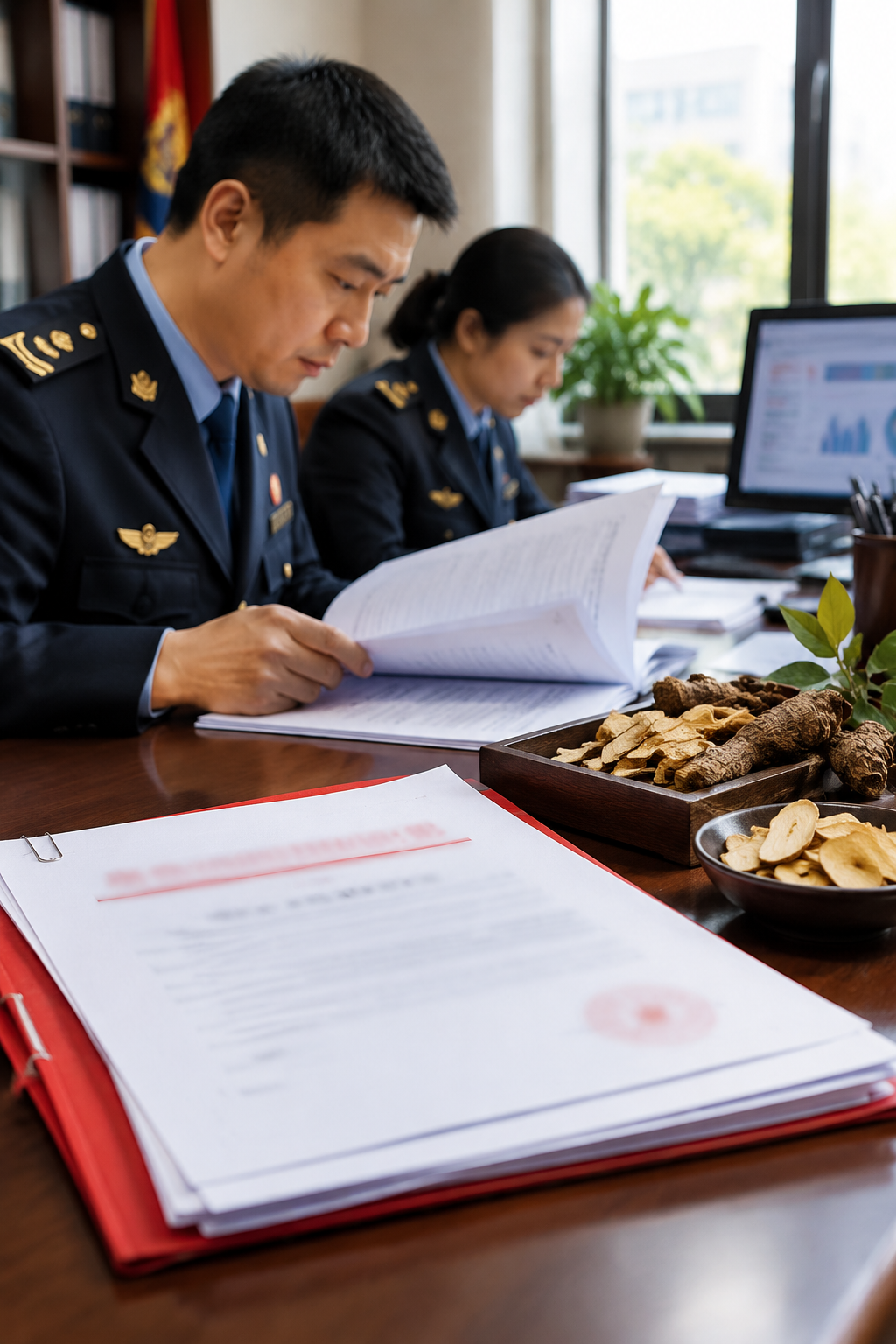
In February 2026, Cangnan in Zhejiang province issued a "Review Scheme for Food Production Licences Covering Food-Medicine Substances." Huangjing (Polygonatum) was placed, together with dihuang (rehmannia), roucongrong (cistanche) and ginseng, inside the licensing framework for "other foods" (category number 3101).
Sellers of ingredients, tea drinks and gift boxes keep asking the same four questions. This file is the place to start.
Is huangjing an ingredient or a medicine, and does using it in food cross a line?
It is a food-medicine substance published by the state, not a grey-area workaround. What matters is choosing the right licensing route.
Entry to the catalogue follows a fixed channel: after the National Health Commission receives an application it organises a review, and where food-safety requirements are met it issues a public notice jointly with the State Administration for Market Regulation to add the substance. In August 2024, dihuang, maidong, tiandong and huajuhong went through exactly this process.
Huangjing is itself on the food-medicine substances list. The Cangnan scheme of February 2026 manages it within the same framework as dihuang, roucongrong and ginseng. Local regulators are already marking out the lanes.
If it is all called huangjing, why can prices differ several times over?
Because "huangjing" is a name, not a specification.
This is common knowledge in Chinese medicinal materials. Chuanbeimu is a ready example: songbei, qingbei and lubei are all seen on the market, and songbei, prized for its characteristic "embracing the moon" form, sits in the premium category and commands a clearly higher price. What actually separates prices is growing environment, years of growth, processing method and quality-inspection standards (according to industry explainers on Chinese medicinal materials).
Huangjing works the same way. Traditional growing areas cluster in the Yangtze basin and the mountains to its south, with cultivation in Anhui, Hunan, Guizhou, Yunnan and Jiangxi. Within a single batch, whether the root is sun-dried or repeatedly steamed and sun-dried, whole or sliced, and how many years it grew, the quoted figures are not on the same scale. Some sellers label their material plainly — "Wuyishan origin, whole roots steamed nine times and sun-dried nine times" — putting origin and process on the label, which persuades far better than the word "authentic."
Daodi, the idea of a recognised genuine growing area, has hard indicators. Xiaocaoba in Zhaotong, Yunnan, is recognised as the daodi area for tianma (gastrodia), at over 2,000 metres altitude, grown wild-simulated under native qinggang forest, and harvested only after five years. Altitude, forest understorey and years cannot be rushed.
Is nine-steaming and nine-sunning a gimmick, and how should it be stored?
The process is real. Storage deserves just as much attention.
Traditional processing of huangjing broadly follows two routes: sun-drying, and alternating steaming and drying. Nine-steaming and nine-sunning belongs to the second; after repeated cycles the colour deepens and the texture softens, giving a rich, glutinous chew that some describe as like a chewable sweet — that is a description of mouthfeel, nothing more. When buying, use "whole root or not" and "nine-steamed or not" as two sieves; it works better than looking only at the packaging.
On storage, dried herbs fear damp above all. Sealing, keeping out light and a cool, dry place are the basics. Repeatedly steamed and dried products usually contain more sugar, and once damp they tend to soften and turn sticky, so finish them reasonably soon after opening rather than leaving them open beside the stove.
What is the market actually doing, and is there still time for small sellers?
Our inclination: watch licensing and channels rather than raw-material quotes.

On the raw-material side, as of now there is no single authoritative quotation for huangjing; trade is generally priced in tiers by origin, specification and processing method, so quotes from different shops carry limited reference value. What is genuinely shifting is policy and channels.
In an excerpt from a Chinese People's Political Consultative Conference proposal, the Chinese Peasants' and Workers' Democratic Party central committee suggested incorporating the development of the food-medicine substances industry chain into the national plan for high-quality development of the broad health industry, establishing a national-level deliberative body, accelerating review and approval of varieties with a long history of consumption and verified safety, simplifying market-entry procedures, and encouraging companies to pursue deep processing and brand-building based on distinctive food-medicine substances. Local licensing documents have already landed. Put the two together, and the threshold in this lane shifts from "can you do it" to "are you doing it in a properly regulated way."
What this means for operators
Check the licence before the origin. Whether a substance can be sold as an ordinary food determines whether you are running a business or taking a risk.
State the specification clearly. Origin, years and processing method — write these three plainly and consumers will compare prices themselves.
Build combinations, not lone items. PAKONTONG's "Twenty-Four Herb Tea" gift box runs six varieties in parallel — Pak On Selection, Ejiao and Rose Nourishing, Chrysanthemum and Cassia Seed, Adzuki Bean and Coix Seed Lightness, Ziziphus Seed and Poria for Restful Sleep, and Ginseng and Huangjing Iron Man — in individual small tins, presented as a premium gift box suitable for friends and family, available on JD.com. The ginseng and huangjing variety shows where huangjing sits in gift-box logic: it need not carry a story on its own, but it should be one part of a combination.
To make ingredients more "experienceable," the PAKONTONG Herbal Tea & Coffee store at City Balcony, Zhuhai, is a sample worth studying: by day it serves freshly brewed herbal tea, new-Chinese-style coffee (with chenpi, osmanthus and longjing folded into the coffee) and Chinese whole-leaf tea, and after dark there are herbal craft brews and herbal cocktails. The same batch of ingredients becomes different products at different hours, giving both average spend and repeat purchase two sources. The three forms of support offered on the franchise side — offline experience stores, dedicated e-commerce stores, and a private-domain mini-program (scan-to-order, membership and orders) — essentially connect "having tasted it" with "taking it home."
In the food-medicine substances business, what comes next is not who recognised the two characters huangjing first, but who can explain origin, process and licensing clearly at the same time.
Experience store, e-commerce store and mini program support.