
Community Store or Mall Kiosk? Three Price Bands in Herbal Tea Retail
Herbal tea shops now sit in three price bands, each with its own cost structure. The choice comes down to customers, dayparts and rent.
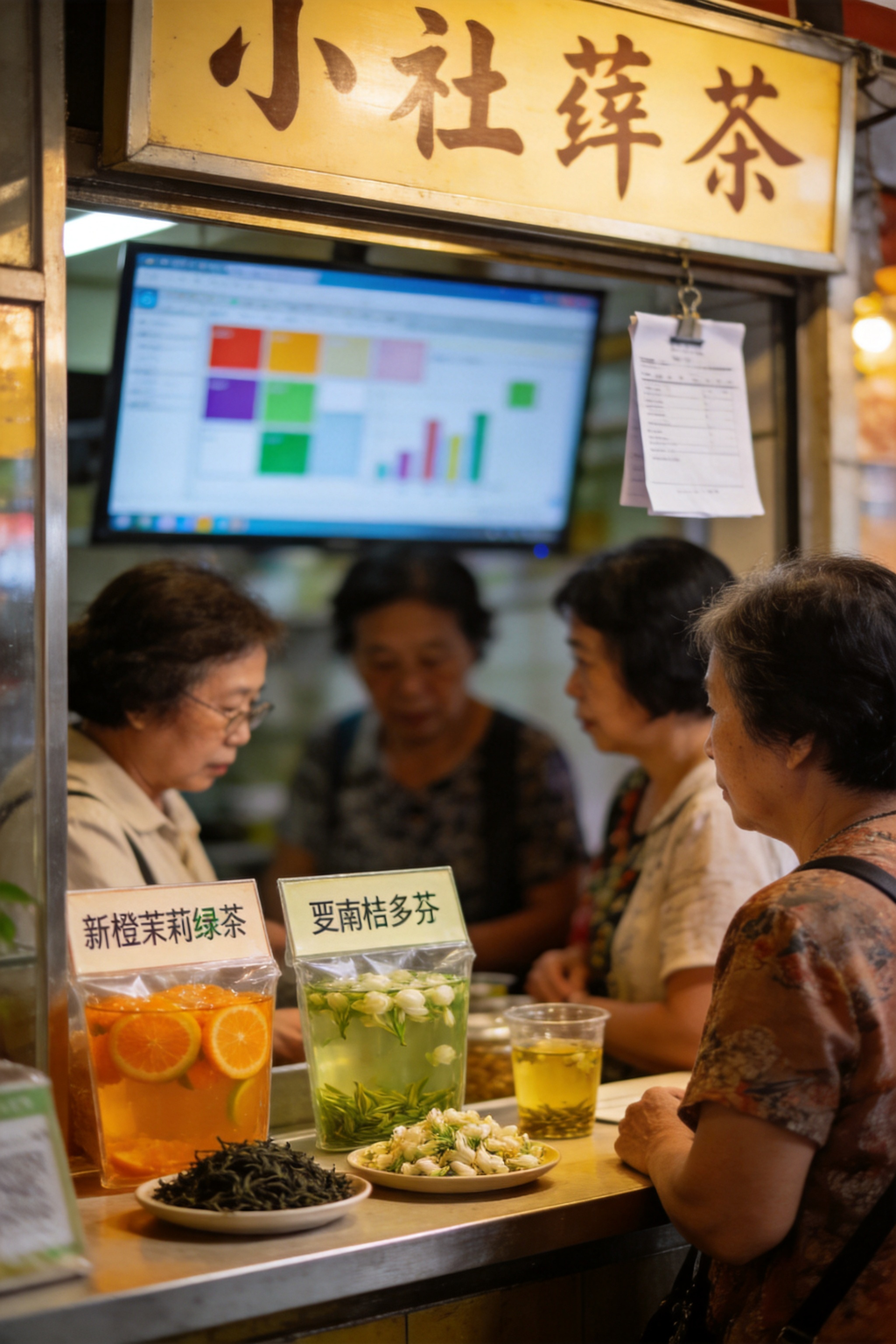
Autumn and winter are peak season for herbal tea drinks — and peak season for signing leases. The question readers ask most often is simple: where should the shop go?
Drawing on store observations compiled by Sina News, wellness tea drinks have settled into three price bands: neighbourhood street shops at RMB 10–18 a cup, mall grab-and-go counters at RMB 15–25, and high-end customised herbal shops at RMB 28–48. Behind those three numbers sit three entirely different cost structures. Below are the four questions readers raise most.
"I've found a ground-floor unit in a residential block, next door to a bubble tea shop. Can a ten-odd yuan herbal tea really cover the rent?"
What decides that is not the average ticket — it is how often people come back.
In the same set of store observations, the two steadiest sellers at neighbourhood street shops are fresh orange jasmine green tea and osmanthus oolong, carried by regulars from the surrounding blocks. From 2024 to 2025, drink shops built around fresh fruit and natural flowers and herbs saw average daily footfall rise by roughly 30% year on year (source: industry observation). Rent in a neighbourhood unit is fixed; footfall is the variable. Whether the shop survives depends on how many people on that street are willing to walk three steps for something costing a little over ten yuan.
The neighbourhood shop's rival is not the bubble tea shop next door. It is the question of whether anyone feels like going out today.
So the first thing to check in a residential location is not total footfall but the repeat-purchase radius — how many permanent residents live within a ten-minute walk matters far more than tens of thousands of daily visitors at a mall.
"The same unit is only busy for three hours in the afternoon. Isn't that a waste?"
Sell for three afternoon hours only, and you have paid rent for most of a day for nothing.
The approach taken by the PAKONTONG Herbal Tea & Coffee store at City Balcony, Zhuhai, is to run one shop as two: freshly brewed herbal teas, new Chinese-style coffee (with chenpi, osmanthus and longjing folded into the coffee) and Chinese whole-leaf teas by day; herbal craft brews and herbal cocktails after dark. The same space, the same staff, two shifts a day — only then does the sales-per-square-metre arithmetic work.
Delivery follows the same logic. In Sina News' shop visits, the timber cabin drinks shop at Luhu scenic area in Chengdu, the herbal research studio near Tianjin's Minyuan, and the lane tea shop on Xiamen's Gulangyu all built a dine-in plus delivery model on being good to photograph, good to drink and good to sit in. Such shops usually pair delivery with dedicated insulated bags and anti-spill holders, with delivery fees of about RMB 5–8 and almost no loss in transit.
Before signing a lease, walk the street twice more: is anyone still around at eight in the evening, and is the delivery radius offices or homes? Those two things decide how many hours a day your shop can actually trade.
"How many items should the menu carry without dragging yourself under?"
Two lines are enough: classics to hold the base, seasonal items to bring people back.
The store observations give a fairly concrete combination: keep classics such as fresh orange jasmine and osmanthus oolong, push a snow pear and osmanthus drink in autumn and a ginger and red date tea in winter. The classics spare regulars from having to think; the seasonal items give them a reason to return.
The other half of product selection is making the ingredients visible. A prep counter displaying whole chrysanthemum flowers, whole gouqizi (goji berries) and dried osmanthus, with cutting, hand-muddling and juicing done to order — these details are themselves a form of trust. Consumers judge whether a wellness tea shop is reliable on three things: the prep counter, the display of raw materials, and the ability to customise.
Gift boxes extend the same thinking. PAKONTONG's twenty-four-flavour herbal tea gift box series runs to six variants — Baian Selection, e jiao and rose, chrysanthemum and juemingzi, adzuki bean and coix seed, suanzaoren and fuling, and ginseng and huangjing — in individual small tins, sold on JD.com. In-store brewing and gift boxes are two different businesses, but the logic of splitting one product line into six characters holds either way.

"Three months after opening, how do you get people to come back?"
A membership scheme is not a discount card. It turns a single transaction into a record.
In Tmall Car Care's 2026 public cases, disclosed via Autohome's Chejiahao, Wu Songhua's team posted a customer renewal rate above 70% in May; in June, backend data from Li Yunfeng's store showed members visiting 50% to 80% more often than non-members. Among membership-day cases compiled by Sina News on 20 September 2026, Sam's Club's "member open day", with 20 bestsellers cut by 30%–50% plus limited-quantity flash sales, tripled single-day sales and lifted new member sign-ups by 120% month on month.
Both sets of numbers point to the same thing: repeat business comes from giving people a reason to return, not from begging them to. The reason can be a seasonal limited edition, a stored-value benefit, or simply a birthday voucher.
The most basic move is to keep orders in your own hands. Scan-to-order, membership and order records are the one part of franchise support that should never be skimped on — otherwise, at the end of the month, you will not even know the names of your regulars.
What this means for operators
Site selection is really three questions stacked into one: which customers, which dayparts, which cost structure. Neighbourhood shops earn on frequency, mall shops earn on traffic, custom shops earn on experience — you cannot earn all three at once.
In our view, the real danger is not expensive rent. It is carrying a neighbourhood shop's cost structure under a mall shop's pricing, or paying a full day's rent with three afternoon hours of turnover. Work out those three numbers first, and only then argue about whether the herbal tea tastes good.
Filling out the hours of the day and the seasons of the year is more solid work than opening one more counter.
Experience store, e-commerce store and mini program support.