
The 24 Solar Terms at Ten: How Lingnan's Slow-Simmered Soups Moved Into Young People's Jars
Ten years after China's 24 solar terms joined UNESCO's heritage list, the old eating calendar is being repackaged for younger buyers in jars, gift boxes and tea-café spaces.
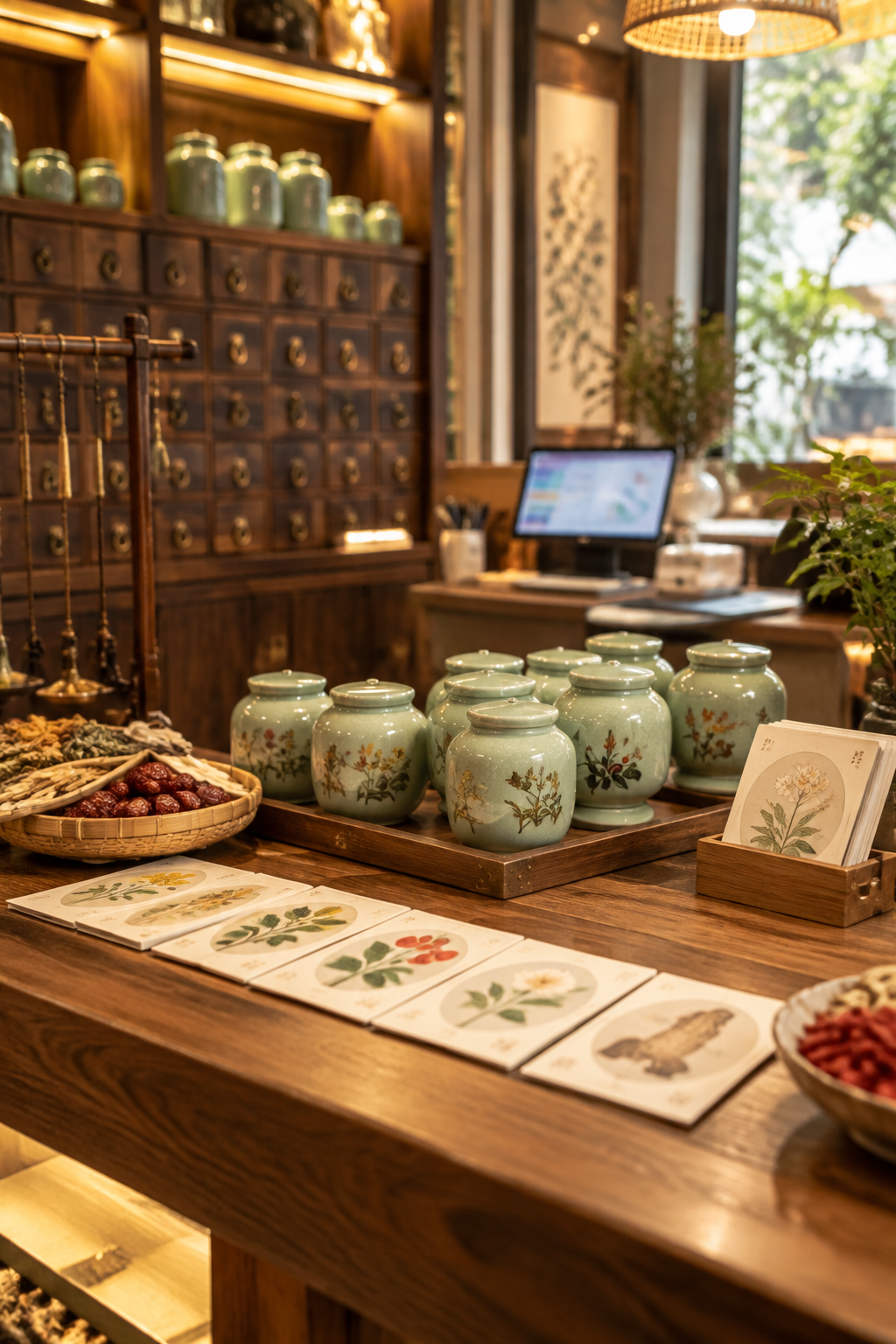
In September 2026, two events more than a thousand kilometres apart pointed at the same thread. A Chinese time-honoured pharmacy in Nanyang opened a food-as-medicine section in its own store, and a researcher marked ten years since the 24 solar terms were inscribed by UNESCO. The eating calendar the solar terms set out is being placed on shelves in a new form.
The solar terms are not words on a calendar but a timetable for eating
In November 2016, China's 24 solar terms were added to the Representative List of the Intangible Cultural Heritage of Humanity. By 2026 it is exactly the tenth year.
An article in the 24 Solar Terms Culture Series published on 30 September 2026 set out the logic plainly: the essence of seasonal eating is bushi bushi — "not eating what is out of season" — following what each period produces. At the start of spring, people bite into spring with spring pancakes and radish; at Qingming, spring mugwort becomes qingtuan; at the summer solstice, noodles; at the winter solstice, dumplings in the north and tangyuan in the south.
It is not only festivals. In the north, the start of autumn calls for "putting on autumn fat"; in many southern places, the dog days call for fuyang, lamb eaten in the hottest stretch of summer. The same solar term can mean a different dish in the north and the south.
Older texts leave traces too. The Records of the Seasons of Jingchu notes that on the seventh day of the first month, the day of people, households made soup "with seven kinds of vegetables." Seven seasonal vegetables boiled in one pot — that was how people ate more than a thousand years ago.
One line in that article gets to the root of it: food is not only for filling the stomach, but a ritual of eating that answers to the order of heaven and earth.
Lingnan boiled that timetable into a pot of soup
Follow the thread south and the climate changes, and so does the way people eat.
Lingnan is hot and damp, and soups and herbal teas are two staples of the local daily diet: a few pieces of old winter melon with the skin on, a small piece of aged chenpi, simmered slowly; the dark ershiwei herbal tea sold on street corners is another form of the same idea.
Wuzhimaotao (five-finger peach root) is often called a "natural coconut-scented soup ingredient" in Lingnan and has long been a common soup base. To be clear: traditionally these plants are used as ingredients for soups and infusions, part of local dietary habit, which is a different matter from taking medicine.
In Hong Kong, old houses turned time into a signature. According to the official website of the Hong Kong Chen Li Ji pharmaceutical factory, Chen Li Ji established its Hong Kong factory in 1922; in its own words, the three characters "Chen Li Ji" stand not only for history but for the founding intention of "helping the world with one heart." The streets lined with Chinese medicine shops, herbal tea stalls and ginseng and dried-seafood stores are another kind of memory of the solar terms for older Hong Kong people — when to use what, without checking a calendar, just by seeing what the shops put out.
Young people picked up the thread, only changing the container
If for centuries this was passed down pot by pot, today it is more often handed to young people in small jars, gift boxes and stores.
Take PAKONTONG's 24-herb tea gift box series, six varieties in individual small jars: Baian Selection, Ejiao and Rose Nourishing, Chrysanthemum and Cassia Seed, Adzuki Bean and Coix Seed Light, Jujube Seed and Poria Deep Sleep, and Ginseng and Polygonatum Iron Man, in premium gift boxes, currently sold on JD.com. We describe only the form and the names. The six names are themselves a signal: young people are not rejecting herbs, they want them to appear from the start in a form that can be given as a gift and put on the table, rather than pulled from deep in a medicine cabinet.

The space is changing too. PAKONTONG currently has only one store, the PAKONTONG Herbal Tea Café at City Balcony, Zhuhai. By day it serves freshly brewed herbal tea, new Chinese-style coffee (chenpi, osmanthus and longjing folded into coffee) and Chinese whole-leaf tea; at night it switches to herbal craft beer and herbal cocktails. The same set of herbal ingredients, split into two dayparts — this is "eating in step with the seasons" translated into a form young people are willing to sit down for.
The old houses are moving as well. According to a 29 September 2026 report by Huaren Toutiao, the Nanyang time-honoured pharmacy Wanxingdong, founded in 1767, opened on 28 September the city's first in-pharmacy food-as-medicine display and experience section, staffed with specialists for food-nourishment education and dietary pairing consultations. Such sections change the old approach of scattered sales for food-as-medicine products: first let people see, then let them ask.
What this means for operators
We see three takeaways.
The solar terms are a timetable you do not have to invent. Twenty-four points in a year, each tied to what is in season, what tastes right, what occasion fits — it is ready-made. Following it for product selection and launches is steadier than chasing a hit that may be hot for only a few weeks.
The asset of an old house is time, not packaging. Chen Li Ji's factory in 1922, Wanxingdong's shop in 1767 — those years speak for the brand. New brands cannot copy the years, but they can copy the practice of placing products inside the rhythm of daily life.
Scenarios are harder to replace than products. The trust that slow-simmered soup carries was built pot by pot; to hold on to it today, you first need a place where people can sit down. PAKONTONG's current approach has three legs: the City Balcony store in Zhuhai as a model experience store, e-commerce as a dedicated storefront, and a private-domain mini-program handling QR-code ordering, membership and orders. The first lets people taste it, the second lets them buy it, the third lets them remember it — that is our understanding of franchise support.
The solar terms come back every year, and the way they come back keeps changing. Whoever can translate "eating in step with the seasons" into a form today's young people are willing to hold has picked up a thread passed down for several hundred years.
Experience store, e-commerce store and mini program support.