
China's food-as-medicine list now has 106 items — and xiangyuan is one of them
Xiangyuan, a thick-skinned southern citrus, sits on China's official food-as-medicine list. Here is how the trade sources, processes, picks and stores it.
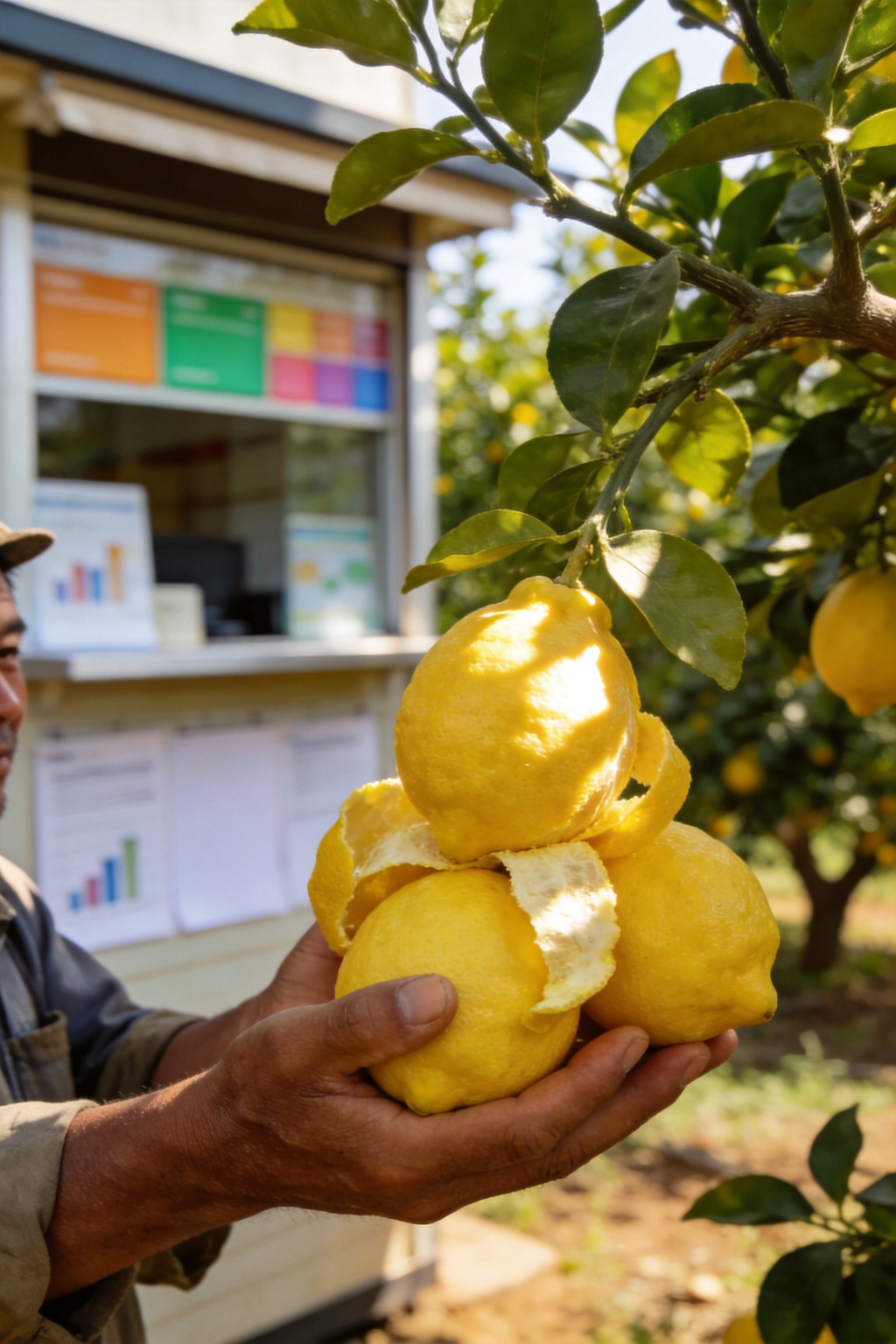
On 30 September, Langfang Hospital of Traditional Chinese Medicine devoted an entry in its public education column to a single fruit: xiangyuan (Citrus medica), a thick-skinned citrus from southern China. The article opened with a number. As of May 2025, it said, the national catalogue of substances traditionally used as both food and Chinese medicinal material had grown to 106 items. Xiangyuan is one of them — a fruit that sits with one foot in the orchard and one on the stove.
Why a citrus fruit appears on a list of 106
Xiangyuan belongs to the Rutaceae family, genus Citrus; the fingered citron known as foshou is a variant of it. The peel is thick, the flesh scant, the aroma heavy — cut one open and the scent is all over your hands. In traditional cooking its role is closer to spice-plus-fruit: candied into preserves, sliced into water, brewed alongside tea leaves, and in Guangdong and Fujian added by the slice to braised meat to cut gaminess.
Making the list is not an award. As of May 2025 the catalogue held 106 items, according to the Langfang hospital article. Inclusion is what allows a substance to be produced, distributed and shelved as an ordinary food — the first commercial gate that the phrase "food as medicine" (medicine-food homology) has to pass through.
"Daodi" is ground out by the growing region
Xiangyuan is grown mainly in the warm, humid southern provinces of Guangdong, Guangxi, Yunnan, Fujian and Sichuan. Fresh fruit from around Dali in Yunnan tends to move down two paths, fresh produce and preserves, while the citrus of Guangdong and Fujian more often goes to processing plants.
Daodi — roughly, "of authentic origin" — is not mysticism. It is a stable quality built up over time from three things together: growing region, cultivar and processing. Lishui offers a reference point. In April 2025 the city launched "Lijiuwei", a regional public brand covering nine daodi botanicals including lingzhi and huangjing, with lingzhi already admitted to the food-medicine catalogue; according to Tencent News, the city's Chinese medicinal planting area exceeds 350,000 mu across 154 townships, and from January to July 2026 above-scale enterprises in its traditional Chinese medicine and health sector recorded industrial output of 9.743 billion yuan. Take Wubao in Shaanxi: Sina Finance reported that jujube cultivation there runs back more than three thousand years, and that Yellow River floodplain jujube is a daodi food-as-medicine fruit. A cultivar earns the name daodi through decades of cultivation data and processing habit.
Harvest and processing: the enemy is a few days of rain
Traditionally xiangyuan is harvested in autumn and winter as the fruit turns yellow, mostly between October and December. Best practice is to slice it the same day it is picked — thin slices, spread out, air-dried in a ventilated spot or dried at low temperature. Leave it piled overnight and both aroma and colour drop away.
The same logic plays out in other growing regions. The Wubao report noted that local fruit ripens in autumn, when shifting weather brings frequent overcast rain, making jujubes prone to splitting and rot and leaving the crop heavily dependent on cold-chain storage. Xiangyuan has a thicker peel, but the short harvest window and the need to keep primary processing at the origin are the same.
How it is eaten, chosen and stored
In traditional practice, Lingnan and Minnan cooks put citrus peel into dishes, soups and braises; Yunnan makes xiangyuan preserves and jam, and also slices the fruit into water with honey. In tea, dried slices are commonly brewed with black or oolong tea, or combined with chenpi and osmanthus. All of the above describes traditional dietary custom and makes no claim about health effects.
Choosing: for dried slices, look for intact shape, a natural yellow-white colour and full aroma; reject anything blackened, mouldy, faint-smelling or sharply pungent. For fresh fruit, choose bright yellow peel, a heavy feel in the hand and aroma escaping from the skin.

Storing: keep dried slices sealed, away from light, moisture and insects, and do not stockpile too much at once. Fresh fruit keeps a few days in a cool, ventilated spot and longer refrigerated, though the aroma fades day by day.
On pricing, public channels currently lack authoritative xiangyuan-specific data. It circulates mainly in three forms — fresh fruit, dried slices and preserves. The first two move through growing regions and specialist markets; the third goes to food processors.
What it suggests for operators
Anyone building drinks or gift sets can read a lesson from xiangyuan: citrus aroma is the kind of thing that anchors a cup in memory. PAKONTONG's twenty-four-herb tea is packed as individual small-canister gift sets (six varieties including Baian Selection, chrysanthemum and cassia seed, adzuki and coix, and ginseng with huangjing); the point of the small canister is that aroma stays sealed in and taking a portion is no trouble. The City Balcony store in Zhuhai brews herbal tea and new-style Chinese coffee by day, with chenpi, osmanthus and longjing going into coffee, and serves herbal craft beer and herbal cocktails at night — citrus aroma sits naturally along that line. The brand describes three forms of support for franchisees: offline experience stores, using the Zhuhai City Balcony store as the model, dedicated e-commerce stores, and a private-domain mini-programme.
Selection still calls for clear eyes. A material like xiangyuan has a strong ingredient feel and many processed forms, and is worth watching over the long term; the barriers are just as real — primary processing at origin depends on weather, dried-slice quality depends on experience, and supply stability matters more than the margin on any single item.
Xiangyuan's place on the list of 106 confirms it is formally recognised as something that can be eaten as food. Whether it is worth building a business on comes down to whether you can find a stable origin and a group of buyers who come back.
Experience store, e-commerce store and mini program support.